Code School

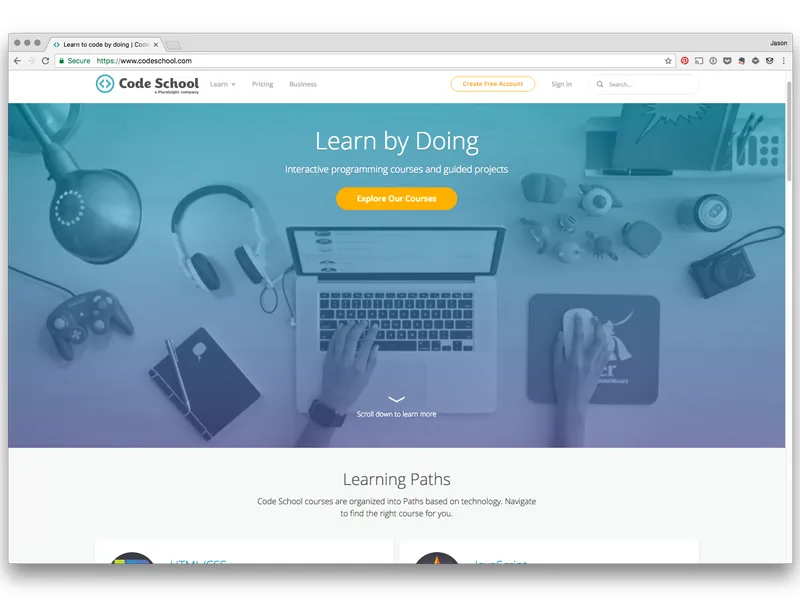
Turning technical education into deeply themed, game-like learning experiences, from Rails for Zombies to a platform used by more than 500,000 developers.
01 · The course that started it
Rails for Zombies made learning feel like an invitation.
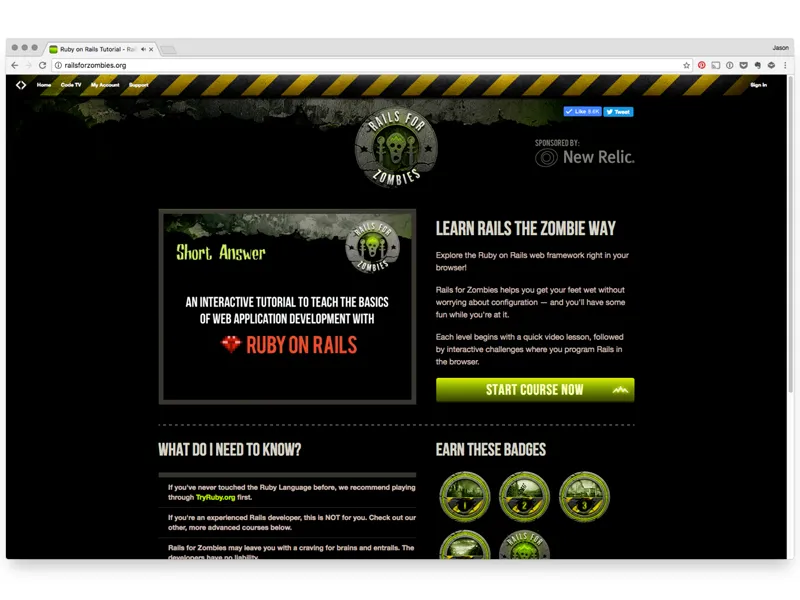
Before Code School was a platform, Rails for Zombies was a free experiment: teach the basics of Ruby on Rails inside a world people would want to enter.
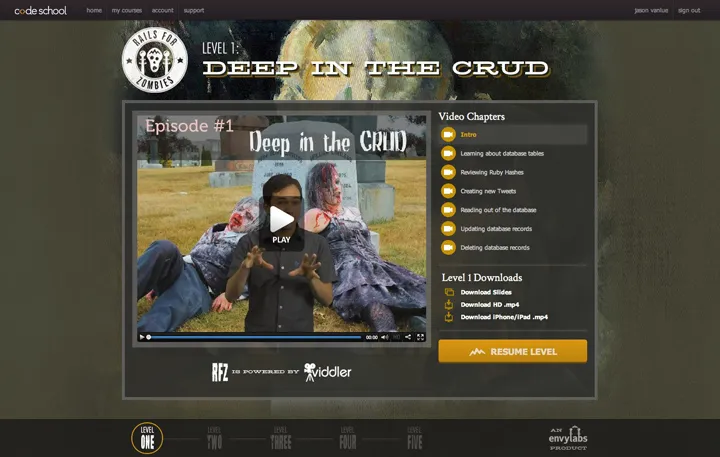
The course combined short videos, live coding challenges, a darkly playful story, and badges worth earning. It gave beginners a reason to keep moving when the material became difficult. The response showed there was room for a different kind of technical education.
02 · Courses as worlds
Every course became its own world.
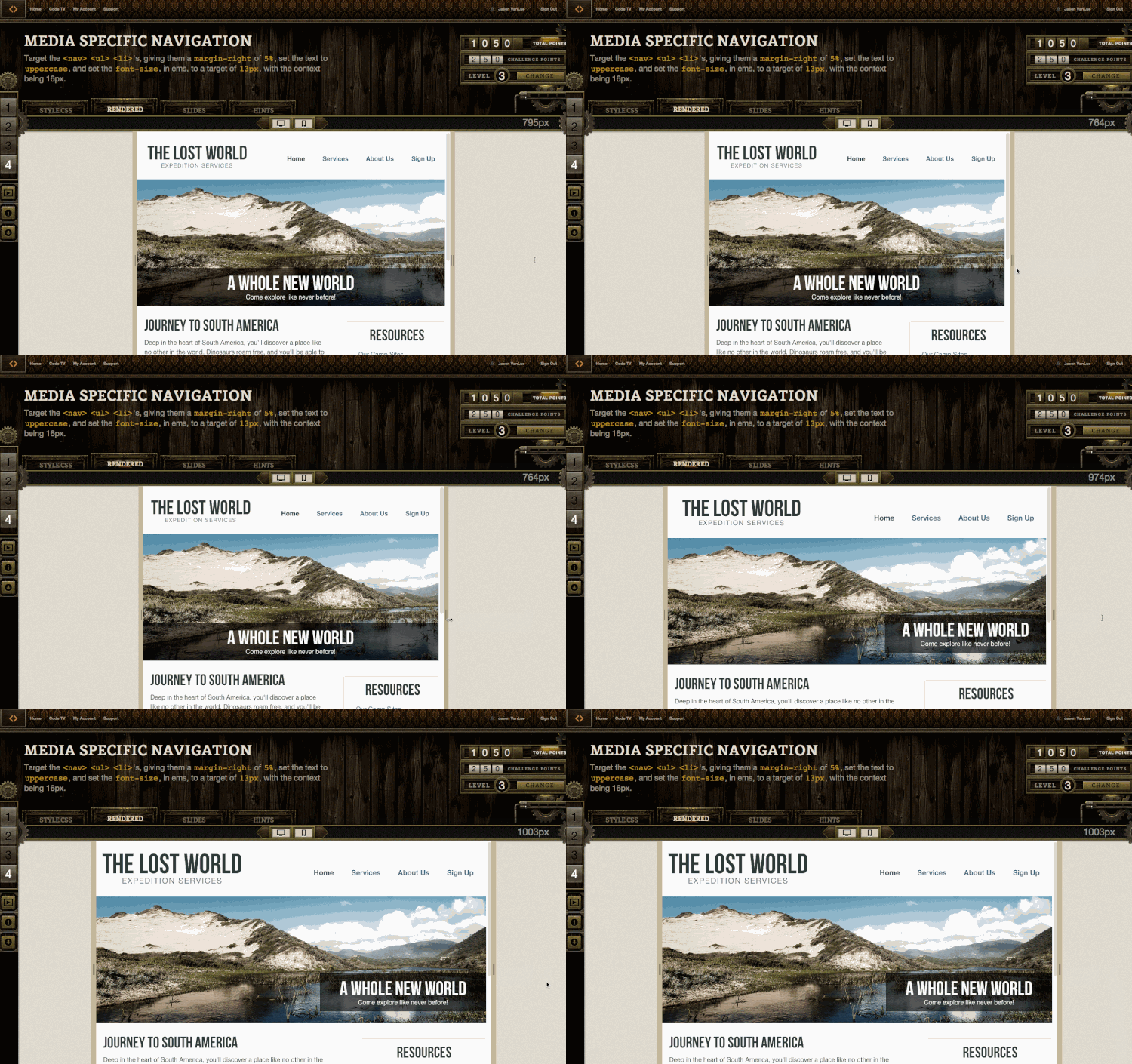
Gamification was not a layer of points added after the curriculum. It shaped how a learner entered a course, understood the journey, recovered from a wrong answer, and felt the satisfaction of finishing.
Themes changed from course to course. Visual language, characters, level maps, badges, transitions, and small interactive rewards changed with them. The mechanics remained familiar while each experience felt authored for the material it taught.

03 · The learning experience
Turn watching into doing, then make progress feel rewarding.
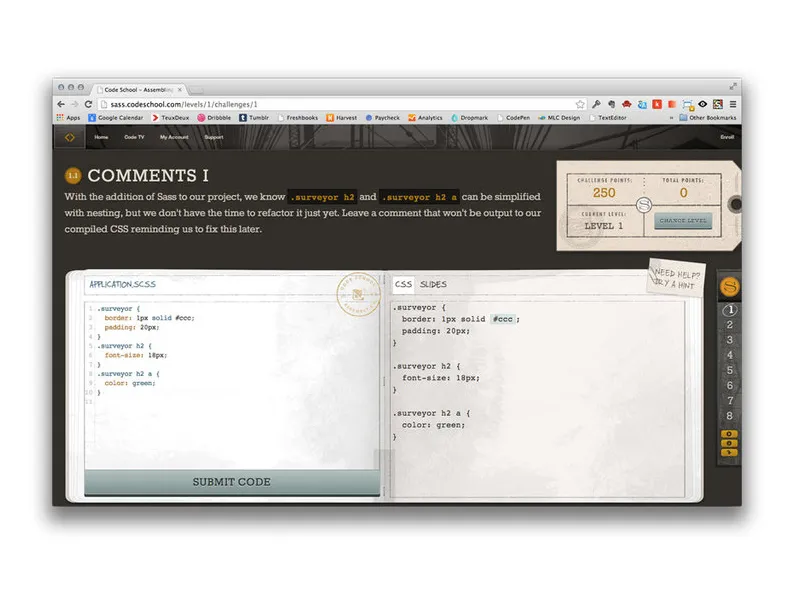
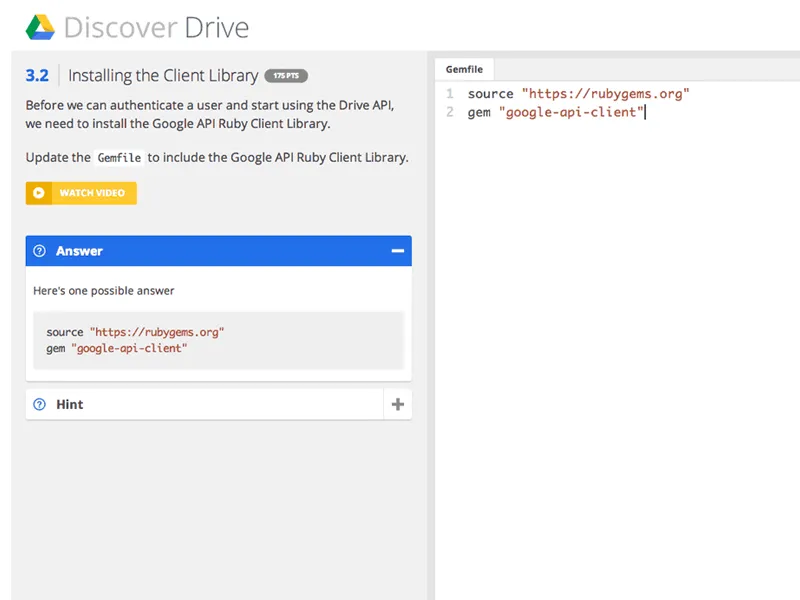
The product brought instruction, code, rendered output, hints, progress, points, and navigation into one focused environment. Learners could try, see what changed, and try again without leaving the course.
04 · The model travels
The same product thinking moved into custom EdTech.
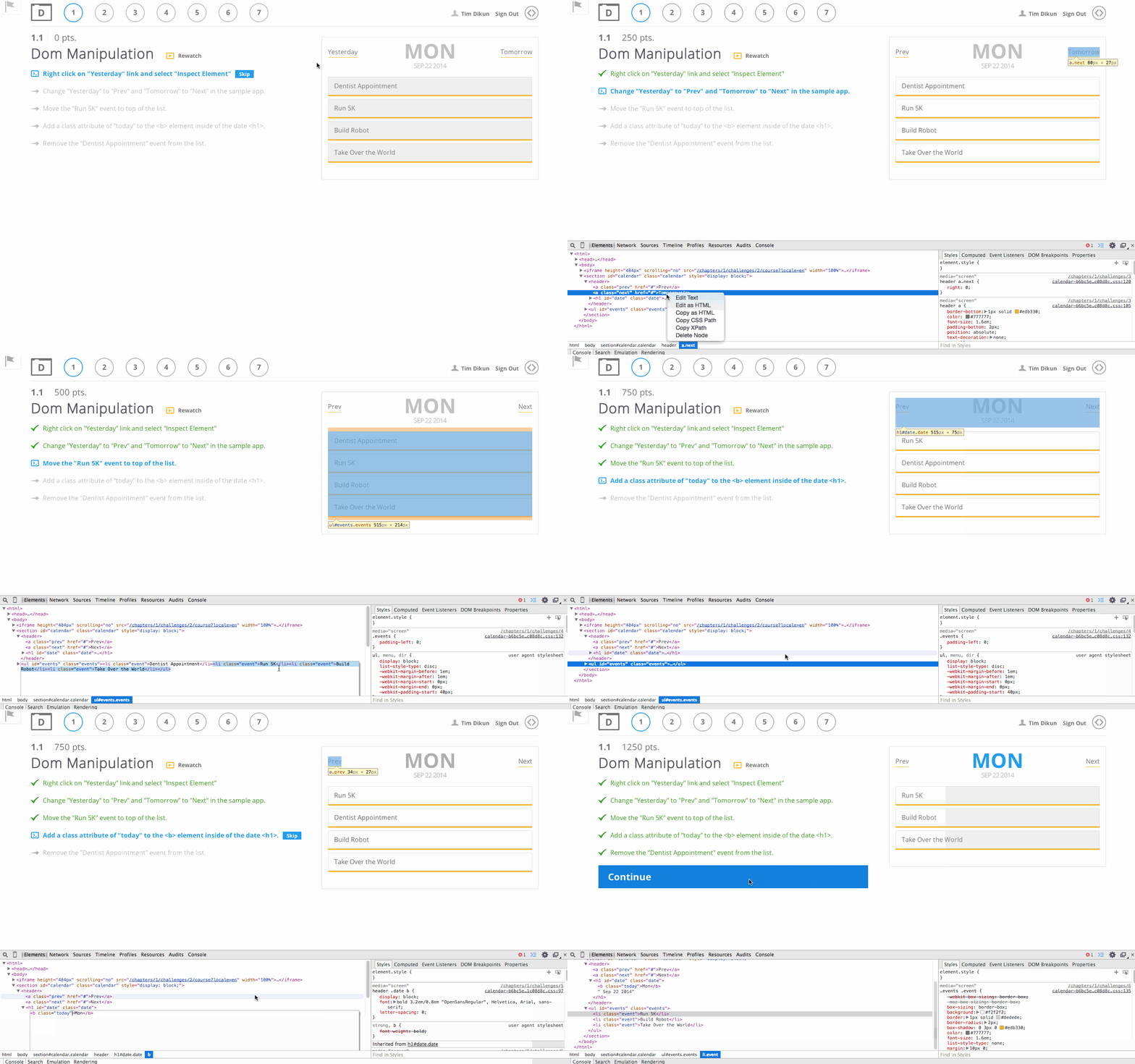
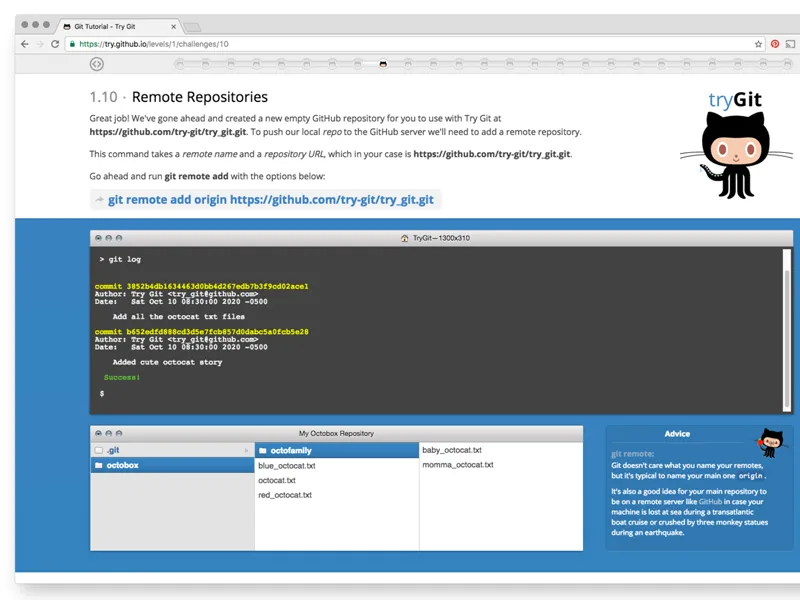
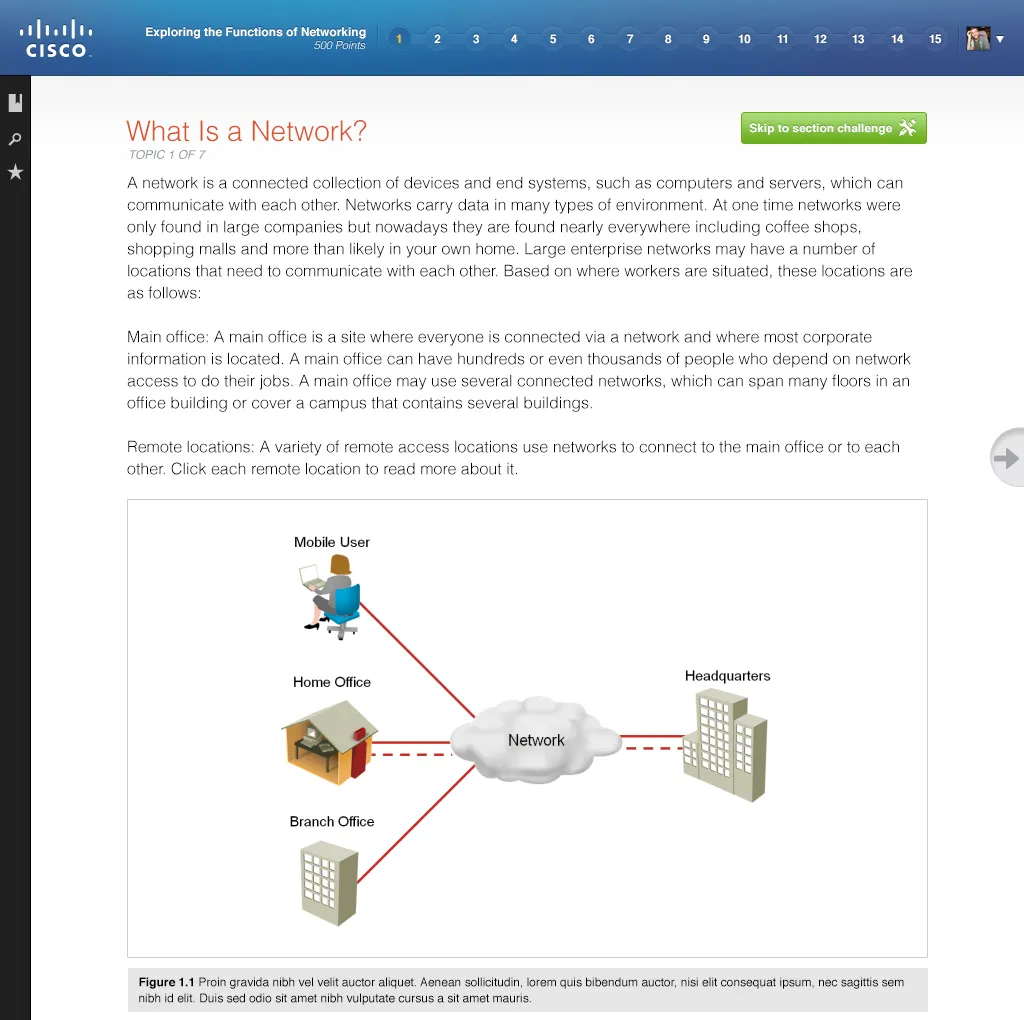
What Code School learned about motivation, practice, and themed instruction translated into custom learning products for technology companies including Google, Dropbox, Cisco, GitHub, and others.
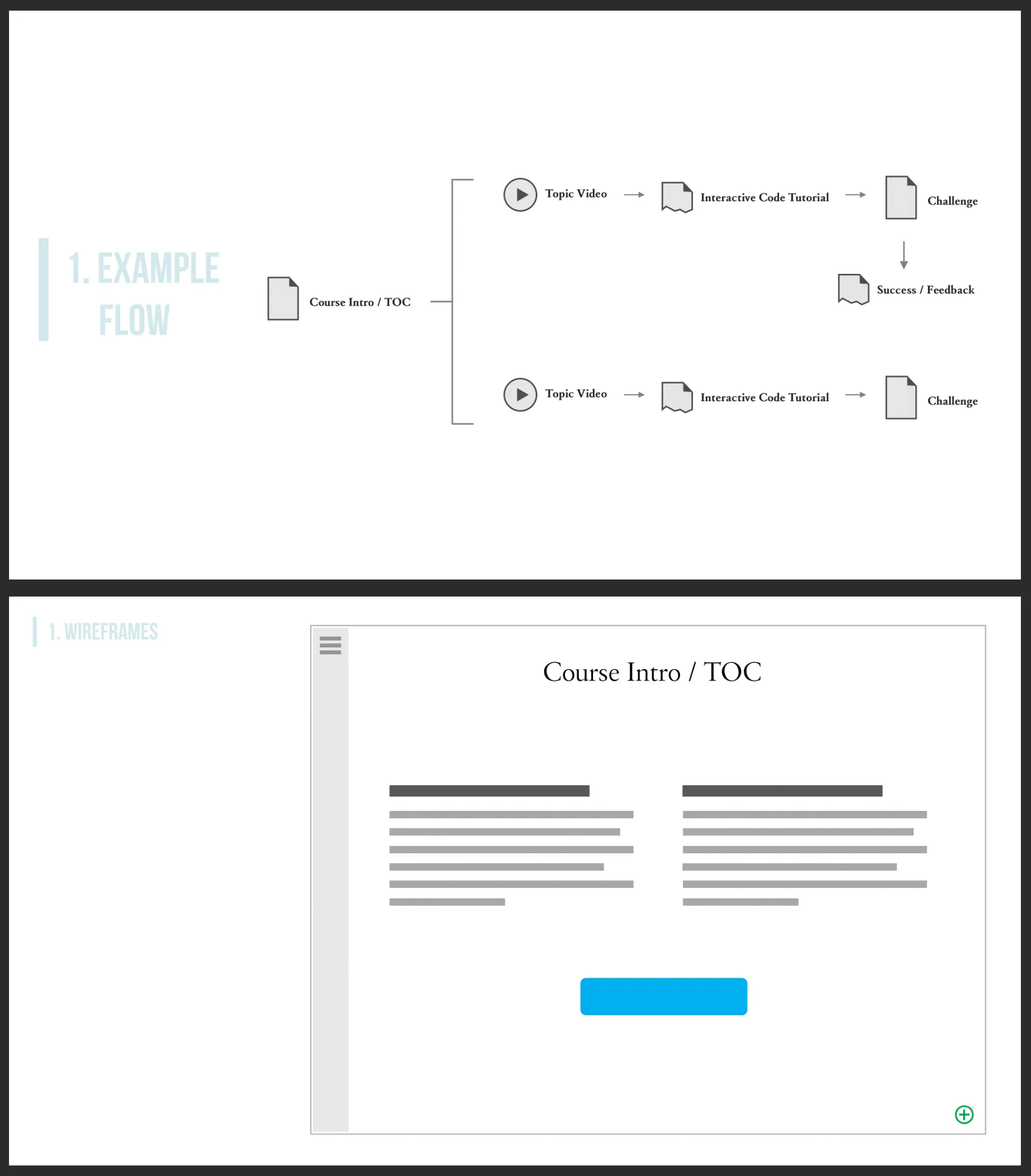
These products did not simply borrow the Code School look. Each one was designed around a partner’s tool, audience, and learning goal, while keeping the core rhythm intact: explain clearly, let people act, show progress, and make the next step feel achievable.


'%20id='use14'%20/%3e%3cg%20id='g22'%3e%3cpath%20d='m%2061.061,4.759%20c%200,-2.587%20-2.113,-4.685%20-4.703,-4.685%20-2.589,0%20-4.702,2.098%20-4.702,4.685%20v%2049.84%20c%200,2.602%202.113,4.699%204.702,4.699%202.59,0%204.703,-2.097%204.703,-4.699%20z%20M%2035.232,22.451%20c%200,-2.586%20-2.112,-4.687%20-4.702,-4.687%20-2.59,0%20-4.702,2.101%20-4.702,4.687%20v%2022.785%20c%200,2.601%202.112,4.699%204.702,4.699%202.59,0%204.702,-2.098%204.702,-4.699%20z%20M%209.404,35.383%20C%209.404,32.796%207.292,30.699%204.702,30.699%202.115,30.699%200,32.796%200,35.383%20v%209.853%20c%200,2.601%202.115,4.699%204.702,4.699%202.59,0%204.702,-2.098%204.702,-4.699'%20id='path16'%20/%3e%3cuse%20xlink:href='%23path16'%20transform='matrix(-1,0,0,1,112.717,0)'%20id='use18'%20/%3e%3c/g%3e%3cuse%20xlink:href='%23g22'%20transform='matrix(-1,0,0,1,216,0)'%20id='use20'%20/%3e%3c/svg%3e)

05 · The outcome
A playful experiment grew into a business.
Code School reached more than 500,000 developers, grew into a substantial subscription business, and was acquired by Pluralsight in 2015.
A lasting lesson was a simple product principle: difficult material does not need to feel dry. A deeply designed environment can make progress legible, give practice momentum, and help more people stay with the work long enough to learn.
500k+ developers learned on Code School
$15M+ annual recurring revenue at peak
2015 acquired by Pluralsight